
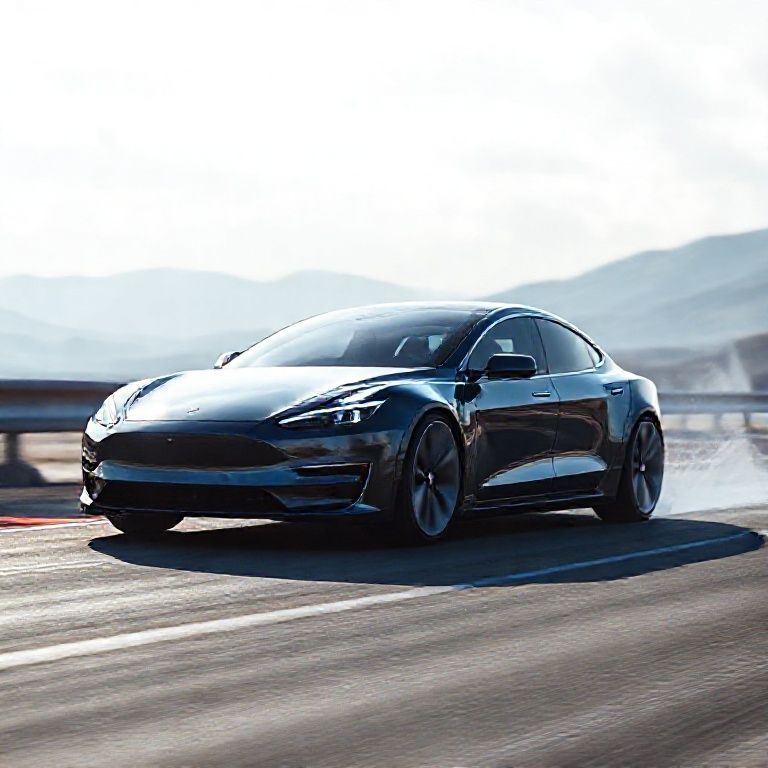
Tesla’s Full Self-Driving (FSD) is constantly under scrutiny, with debates raging about its capabilities and safety. Recent tests pushing FSD to its limits on closed tracks offer valuable insights. One such test highlighted the system’s ability to react to sudden, dangerous situations, specifically a simulated sideswipe scenario. The car successfully swerved to avoid a collision, showcasing a level of responsiveness.
This test involved creating a scenario where another vehicle unexpectedly veered into Tesla’s lane, simulating a potential sideswipe. FSD was activated, and the system immediately recognized the threat. It calculated the optimal evasive maneuver, which involved a quick lane change to avoid contact with the encroaching vehicle. The maneuver was executed smoothly and precisely.
The implications of this successful test are significant. It demonstrates that FSD possesses the potential to prevent accidents caused by driver error or unexpected events. While FSD is not yet perfect, this ability to react quickly and accurately to dangerous situations could drastically reduce the number of collisions on public roads. Every successful test increases confidence.
Experts emphasize that these tests are crucial for refining FSD. By exposing the system to various challenging scenarios, engineers can identify areas for improvement and fine-tune the algorithms that govern FSD’s behavior. The goal is to create a system that is not only capable of navigating roads but also of reacting safely and effectively to unexpected events.
Ultimately, while debates around FSD will continue, this sideswipe avoidance test offers a glimpse into the future of autonomous driving. It highlights the potential of these systems to enhance safety and prevent accidents. As FSD continues to evolve, it is likely to play an increasingly important role in shaping the future of transportation. This test is a good sign.