
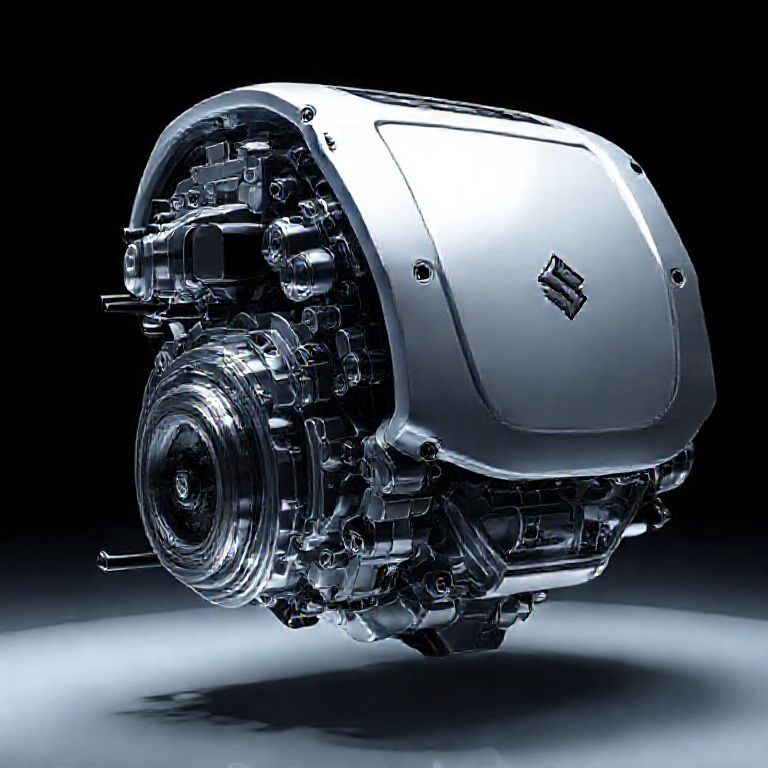
The automotive industry’s latest cautionary tale involves Suzuki’s $110 million gamble on a revolutionary engine—only for it to be shelved within a year. Maruti Suzuki, the Indian arm of the Japanese automaker, poured resources into developing a high-efficiency, low-emission powerplant that promised to redefine fuel economy. Yet, design flaws and technical hurdles derailed the project, leaving executives to write off millions in wasted R&D.
Suzuki’s engine was touted as a leap forward, targeting global emissions regulations while maintaining the brand’s reputation for reliability. However, internal testing revealed critical weaknesses—potential for overheating, durability concerns, and compatibility issues with existing vehicle platforms. These flaws forced Suzuki to halt production mid-development, a rare setback for a company known for cost-effective engineering.
The fallout extends beyond financial losses, casting doubt on Suzuki’s ability to compete with rivals like Toyota and Honda in the race for next-gen powertrains. Competitors like Volkswagen and Hyundai have successfully scaled similar projects, proving that even industry giants face pitfalls when pushing boundaries. For Suzuki, this debacle underscores the high stakes of R&D in an era where innovation must align with pragmatism.
Industry analysts warn that such failures highlight the need for stricter validation phases before full-scale investment. “Suzuki’s case is a reminder that even with deep pockets, engineering risks can’t be ignored,” says Dr. Rajesh Mehta, automotive engineer at the Indian Institute of Technology. “The lesson? Balance ambition with rigorous testing—or risk becoming another cautionary tale in the annals of automotive history.”
As Suzuki rebuilds, the question lingers: Can the brand recover its momentum, or will this setback linger as a black mark on its legacy? The automotive world watches closely, as the stakes for future R&D decisions have never been higher. For now, the shelved engine serves as a stark reminder that in tech—and in engines—the margin for error is razor-thin.