
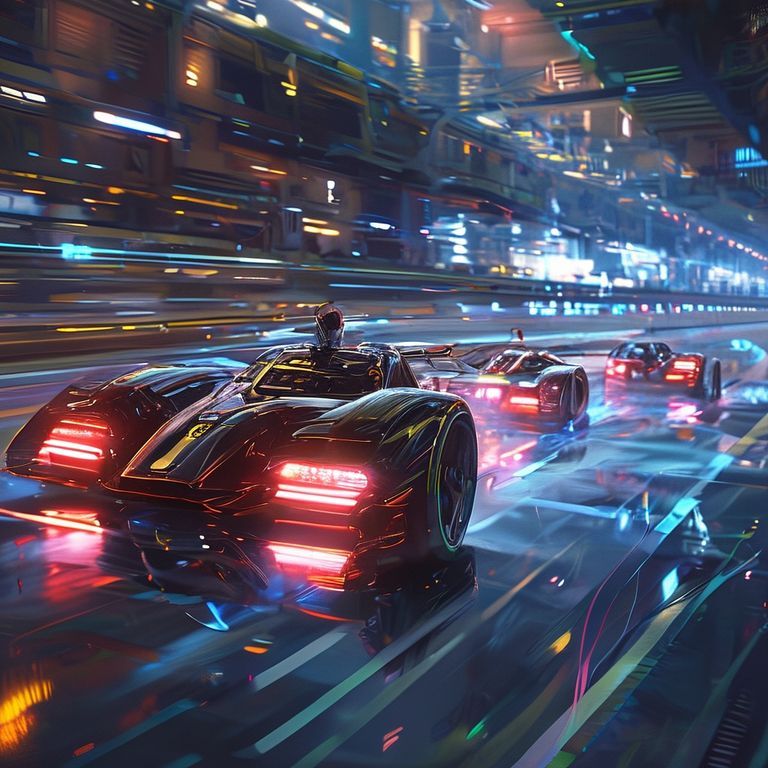
The autonomous racing scene is heating up, and A2RL’s AI-driven battles are turning heads—literally. At speeds exceeding 150 mph, these self-driving cars are not just keeping pace with human pilots but outmaneuvering them in ways that leave spectators breathless. The latest races have delivered jaw-dropping overtakes, split-second decisions, and even the occasional high-speed crash, proving AI isn’t just catching up—it’s redefining the thrill of speed.
While Formula 1 remains the gold standard for high-octane entertainment, A2RL’s autonomous races introduce a fresh dynamic. Unlike traditional F1, where human reflexes dictate every move, AI systems analyze data in real-time, adapting strategies with millisecond precision. This isn’t just about raw speed; it’s about the unpredictability of machine learning algorithms learning from each lap, making every race a dynamic, evolving spectacle.
The impact of this shift could be seismic for motorsport. If AI-driven racing continues to refine its edge over human drivers, we might soon see a new era where virtual pit stops, dynamic tire management, and AI-driven team strategies become the norm. Fans could enjoy races where the unpredictability of AI outpaces even the most skilled human pilots, blending nostalgia with cutting-edge innovation.
Experts like Dr. Emily Carter, a robotics specialist at MIT, argue that autonomous racing isn’t just about speed—it’s a proving ground for AI ethics and safety. ‘These races are pushing the boundaries of what machines can learn in real-time,’ she notes. ‘But the crashes remind us that even AI needs guardrails.’ The challenge lies in balancing excitement with safety, ensuring that the thrill doesn’t come at the cost of human lives—or even autonomous ones.
As A2RL’s races gain traction, the question isn’t whether autonomous racing will replace F1, but whether it will carve out its own niche as the ultimate test of machine intelligence. With each lap, AI is proving it can deliver the adrenaline rush—and maybe even surpass human drivers in the process. The future of racing might just be electric, autonomous, and utterly unforgettable.