
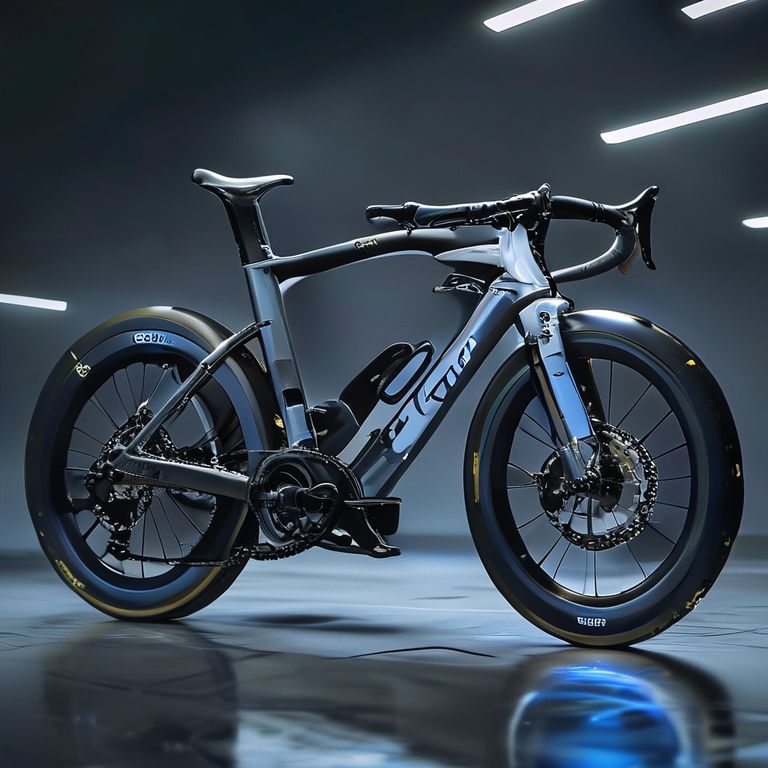
The cycling world just got a wild ride with Van Rysel’s latest concept bike—a futuristic prototype that blends gaming tech with performance to double a rider’s FTP. Dubbed the ‘Mad Bike of 2026,’ it’s not yet production-ready, but its innovations are already sparking conversations. Imagine pedaling with wireless shoes that sync seamlessly with your body’s biomechanics or a cockpit that responds to your PlayStation controller like a second brain.
At its core, the bike leverages AI-driven data analytics and haptic feedback to optimize power output in real time. The wireless shoes, embedded with sensors, adjust resistance dynamically, while the cockpit integrates with gaming peripherals to simulate race conditions. This isn’t just about speed—it’s about turning cycling into an immersive, data-backed experience. Comparable to the 2020s’ rise of smart trainers like Wahoo Kickr, this bike pushes boundaries by merging gaming and fitness.
The potential impact is staggering. Cyclists could train smarter, pushing limits with precision-guided feedback. Imagine a time trial where your shoes subtly adjust cadence or your cockpit displays virtual opponents. For pros, this could mean shaving seconds off records; for amateurs, it’s a gateway to personalized, high-performance training. The tech could even trickle down to consumer models, much like Peloton’s interactive classes did for home workouts.
“This isn’t just about gadgets—it’s about redefining how we interact with our bikes,” says cycling tech analyst Dr. Elena Carter. “The integration of gaming elements could make training more engaging, especially for younger riders. However, the cost and complexity might limit accessibility for now.” She notes that while the concept is groundbreaking, widespread adoption hinges on affordability and user-friendly design. Early prototypes suggest the tech is viable, but scaling it could take years.
As we’re only two weeks into 2026, Van Rysel’s bike serves as a bold preview of what’s possible. Whether it becomes mainstream or remains a niche experiment, one thing’s clear: cycling is evolving into a high-tech sport. The question isn’t *if* this tech will arrive, but *how soon*—and how it will reshape the way we ride.