
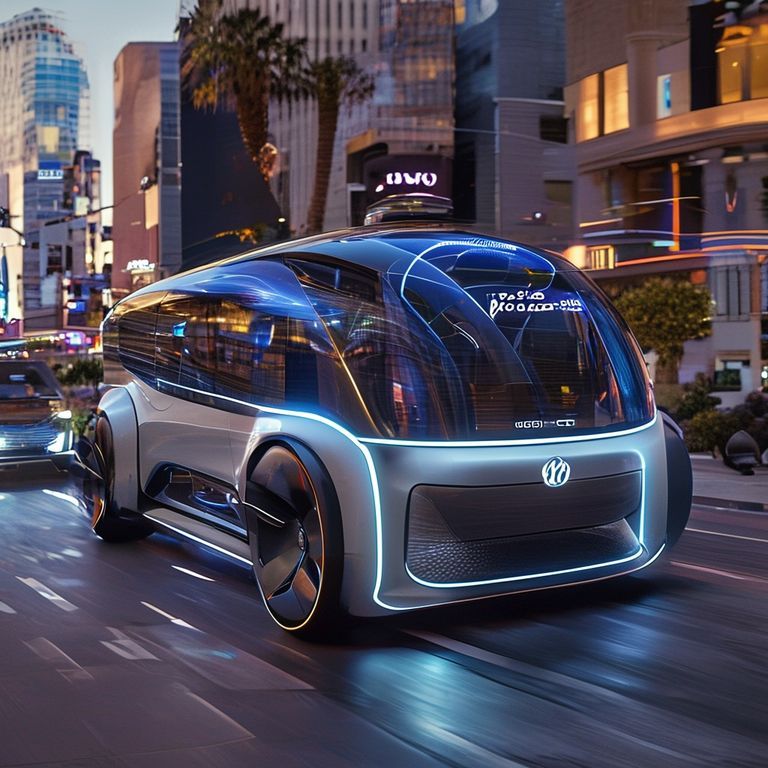
The future of urban mobility just got a test drive—literally. Hyundai and Motional’s newly unveiled robotaxi, tested on Las Vegas’ chaotic streets, has left critics stunned by its precision. Unlike traditional self-driving prototypes that falter in real-world chaos, this vehicle navigates construction zones, aggressive drivers, and unpredictable pedestrians with eerie confidence.
What sets this apart isn’t just the tech but the ambition: Hyundai isn’t just selling rides—it’s building the infrastructure for *your* autonomous car. Motional’s Level 4 system, paired with Hyundai’s IONIQ 5 platform, eliminates the need for a human backup, a first for mass-market deployment. The ride felt eerily smooth, with the car adapting to sudden lane shifts and even parking itself flawlessly.
The implications are seismic. If this scales, robotaxis could slash urban congestion while making car ownership obsolete for many. Early adopters in Las Vegas will get a taste of what’s coming, but the real game-changer? Hyundai’s roadmap hints at consumer-level autonomous vehicles by 2025—imagine ordering a self-driving IONIQ 5 to your doorstep, no keys required.
“This isn’t just incremental progress—it’s a paradigm shift,” says Dr. Lisa Gray, autonomous vehicle analyst at TechForge Partners. “Hyundai’s integration of sensor fusion and AI mirrors Tesla’s early dominance, but with a critical advantage: Motional’s fleet experience translates directly to consumer safety.” The Las Vegas testbed, with its mix of neon-lit chaos and desert sprawl, proved the system’s resilience against edge cases most competitors avoid.
For now, the robotaxi remains a Las Vegas novelty, but the tech’s maturity suggests we’re closer than ever to a world where cars drive themselves—and Hyundai is leading the charge. The question isn’t *if* this will happen, but *when* your next car might park itself.