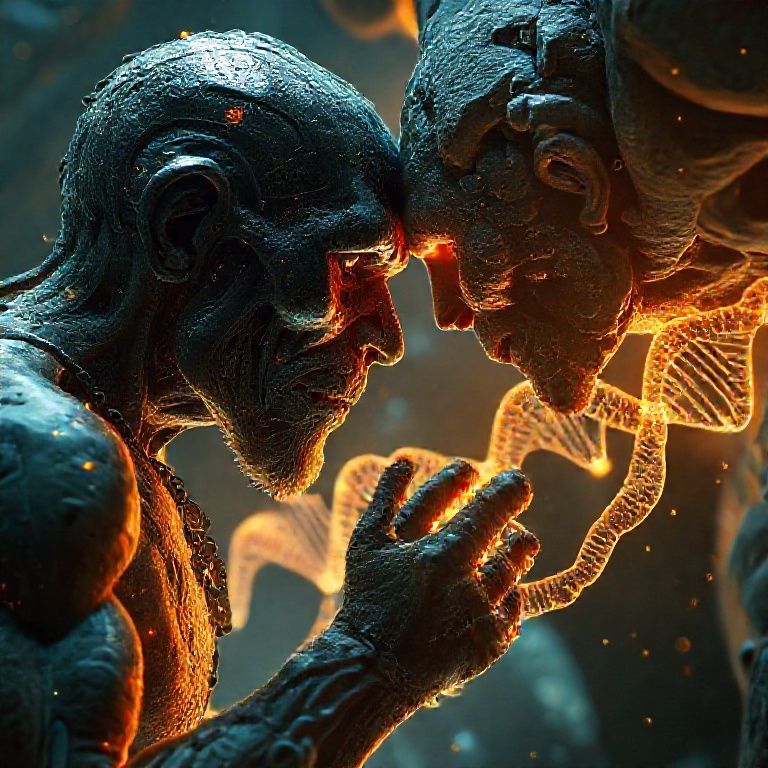

Groundbreaking research has unearthed compelling genetic evidence suggesting that early humans engaged in interbreeding with other hominin species, most notably Neanderthals and Denisovans. This discovery challenges previous assumptions about the strict separation of human and hominin lineages, painting a more complex picture of our evolutionary history. The evidence lies within the analysis of ancient DNA extracted from fossilized remains.
Scientists have long suspected interbreeding occurred, but recent advancements in DNA sequencing technology have provided stronger confirmation. By comparing the genomes of modern humans with those of Neanderthals and Denisovans, researchers have identified specific genetic markers present in non-African populations that are directly attributable to these archaic hominins. These genetic contributions are not insignificant, impacting traits such as immunity and adaptation to different climates.
The implications of this interbreeding are far-reaching. It suggests that early humans were more open to interaction and reproduction with other hominin species than previously thought. This challenges the traditional view of human evolution as a linear progression and highlights the role of gene flow in shaping the genetic diversity of modern human populations. It also raises questions about the social dynamics and cultural practices of early human societies.