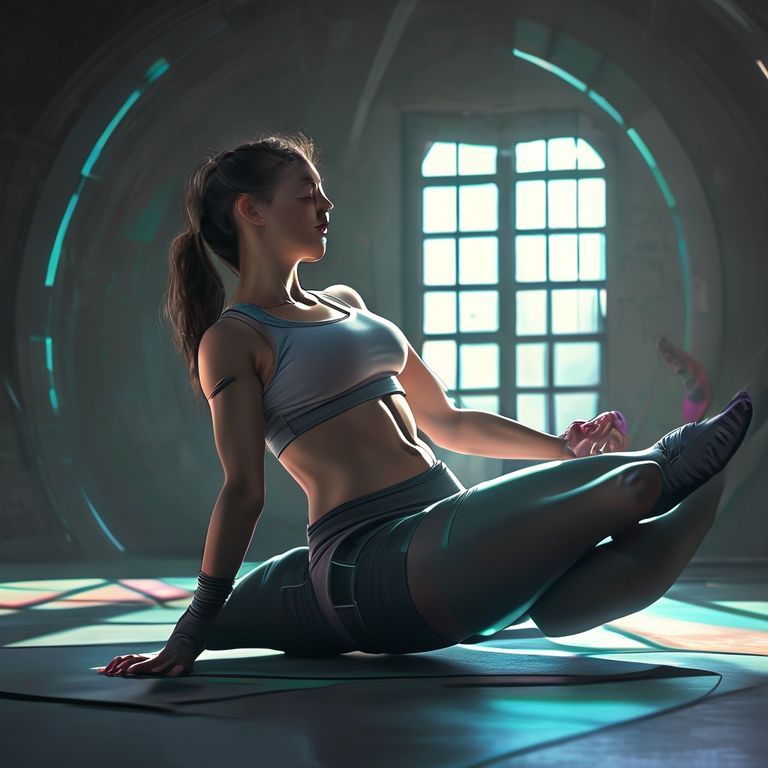

The humble flutter kick—a staple in Pilates routines—has become my daily nemesis. For years, I dismissed it as a simple ab exercise, but after committing to 10 minutes daily, I uncovered a core truth: my midsection was far weaker than I realized. The move’s relentless demand for precision and endurance exposed gaps in my stability, forcing me to confront my fitness blind spots.
Flutter kicks require simultaneous engagement of the transverse abdominis, obliques, and hip flexors while maintaining a neutral spine. Unlike crunches, which isolate the rectus abdominis, this exercise demands full-body coordination. My initial struggle to keep my lower back from arching or my hips from swaying revealed how my core had relied on compensatory movements for years, masking deeper imbalances.
The impact has been transformative. Beyond my core, flutter kicks improved my pelvic floor strength and reduced lower back tension—a side effect I didn’t anticipate. Even my posture has subtly shifted, as the exercise trains my body to resist rotational forces naturally. It’s a reminder that seemingly simple movements can redefine fitness progress when approached with consistency.
“Most people underestimate how much the core stabilizes the entire body,” says certified Pilates instructor Sarah Chen. “Flutter kicks aren’t just about abs; they’re a full-system check. The burn you feel isn’t just in your six-pack—it’s in your connection to movement.” Chen notes that the exercise’s low-impact nature makes it ideal for all fitness levels, yet its complexity ensures no one skips past the foundational work.
Now, I see flutter kicks as more than an ab workout—they’re a mirror. They reflect not just my physical strength but my willingness to push beyond comfort. In a world obsessed with flashy gains, this move teaches humility: sometimes, the smallest exercises reveal the biggest truths. And that’s a lesson worth repeating daily.