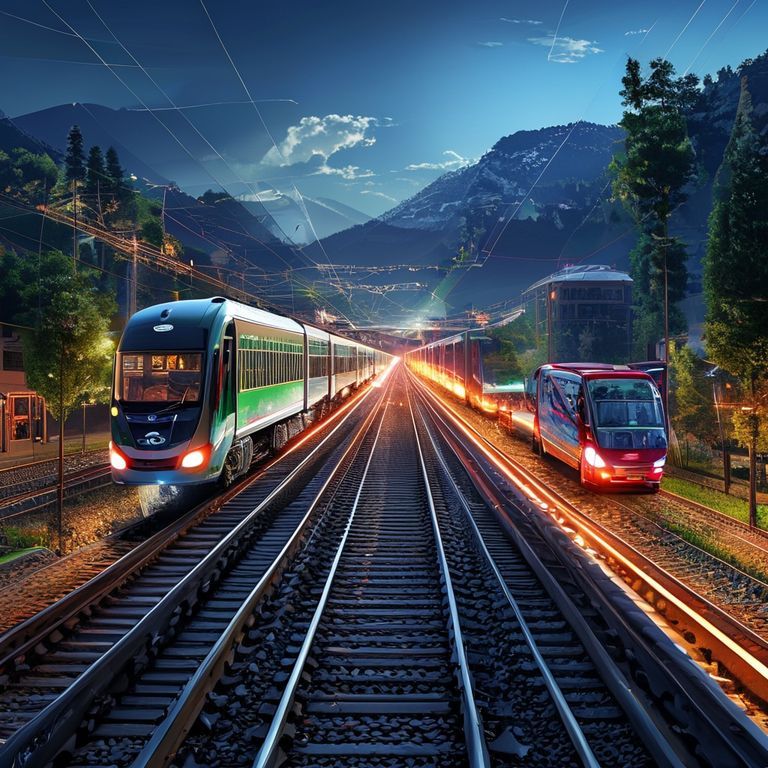
Italy’s Genius GIS Strategy: How Digital Twins Are Revolutionizing Rail Before a Single Euro Is Spent

Italy’s ambitious €20 billion rail modernization push isn’t just about laying tracks—it’s about *seeing* the future first. Before a single euro is invested, the country is deploying cutting-edge Geographic Information Systems (GIS) and digital twins to map every inch of its rail infrastructure, from tunnels to station platforms.
Traditional infrastructure projects often face costly delays due to unforeseen ground conditions, regulatory hurdles, or logistical gaps. Italy’s approach flips this paradigm by creating hyper-detailed digital replicas of existing rail networks, integrating real-time data on terrain, utilities, and population density. This isn’t just static mapping—it’s a dynamic, interactive model that simulates everything from earthquake risks to passenger flow.
The impact could be transformative. Digital twins allow engineers to test scenarios—like flood resilience or energy-efficient electrification—without physical disruption. Stations could optimize space for accessibility, while maintenance teams predict failures before they happen. Early adopters like Germany’s DB Netz have seen up to 30% cost savings on similar projects, and Italy aims to replicate that efficiency.
“This isn’t just about avoiding mistakes—it’s about turning data into a competitive advantage,” says Dr. Luca Moretti, a transport GIS specialist at the Polytechnic University of Milan. “Imagine a system where every stakeholder—from urban planners to freight operators—has real-time access to the same digital twin. That’s not just smarter rail; it’s a blueprint for infrastructure globally.”
Italy’s strategy underscores a broader shift: in an era where AI and IoT are reshaping industries, even legacy systems like rail can leapfrog tradition. The lesson? For nations investing billions, the first step isn’t a shovel—it’s a digital model. And if Italy succeeds, the rest of Europe may soon follow suit, proving that the most forward-thinking infrastructure isn’t built with steel, but with data.